
The Dark Web is one of the most misunderstood parts of the internet. Movies and social media often portray it as a mysterious place filled exclusively with illegal activities, but the reality is more complicated. The dark web is a part of the internet designed to provide greater anonymity and privacy, and it can be used for both legitimate and illegal purposes.
Understanding what the dark web is, how it works, and how it differs from the Deep Web can help internet users make better cybersecurity and privacy decisions.
What Is the Dark Web?
The Dark Web refers to websites and online services that are intentionally hidden from conventional search engines and generally require specialized software or networks to access.
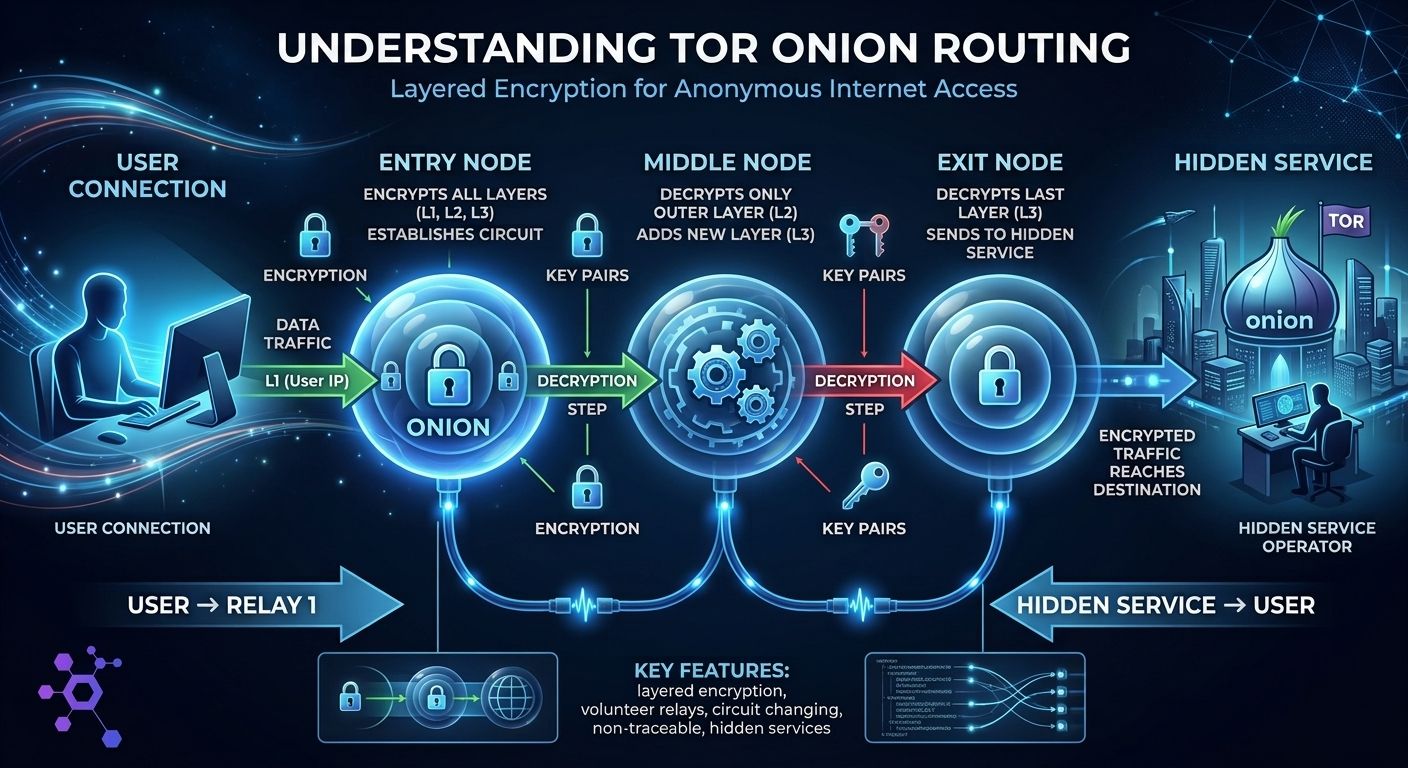
One of the best-known technologies associated with the dark web is Tor (The Onion Router). Tor allows users to route internet traffic through multiple relays, making it harder for websites and observers to directly identify the user's real IP address.
Websites hosted through Tor are commonly known as onion services and use .onion addresses instead of traditional domains such as .com or .org. Tor explains that onion services can hide the service's location and provide end-to-end encryption between the user and the service.
Deep Web vs Dark Web: What's the Difference?
The terms Deep Web and Dark Web are often used interchangeably, but they are not the same thing.
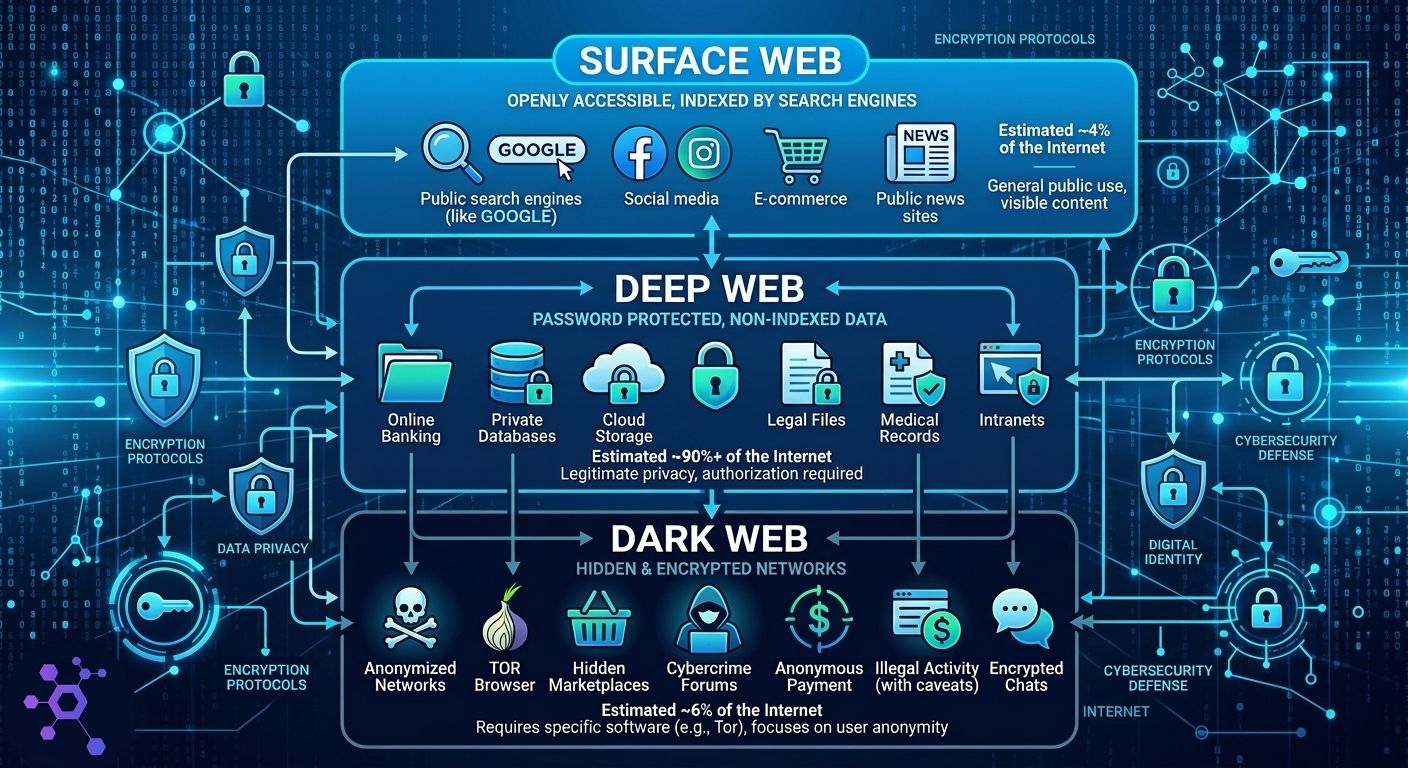
The Deep Web consists of online content that isn't indexed by standard search engines. This includes private email accounts, online banking dashboards, subscription services, company databases, cloud storage and other password-protected information.
The Dark Web is a much smaller portion of the Deep Web that is intentionally hidden and typically requires specialized technologies such as Tor to access.
In simple terms:
Surface Web → Search engines can normally index it
Deep Web → Not normally indexed, but often completely legitimate
Dark Web → Intentionally hidden services requiring specialized access
This distinction is important because being part of the Deep Web does not automatically mean something is suspicious or illegal.
How Does the Dark Web Work?
The dark web relies on privacy-focused technologies that are designed to make it difficult to determine the physical location of both users and services.
Tor's onion-service architecture uses a system of relays and rendezvous points rather than directly connecting a user to a server in the traditional way. The onion service's IP address is hidden, while communications remain encrypted within the Tor network.
This architecture can provide important privacy benefits. For example, journalists and whistleblowers can use privacy-preserving services to communicate with sources. Tor also documents legitimate applications such as anonymous publishing, secure file sharing and services designed to protect sensitive communications.
Why Do People Use the Dark Web?
There are several reasons people may use privacy-focused networks.
1. Privacy
People concerned about online tracking may use technologies such as Tor to reduce exposure of their browsing activity.
2. Censorship Resistance
In countries or environments where certain websites or information are restricted, privacy networks can help people access information more freely.
3. Anonymous Communication
Journalists, researchers and whistleblowers may require communication methods that reduce the amount of identifying information exposed during interactions.
4. Privacy-Preserving Services
Some organizations operate official onion versions of their websites to provide users with an additional privacy-focused method of accessing their services.
However, privacy technology can be abused as well. The same anonymity features that can protect legitimate users can also make it harder to identify people involved in cybercrime and other illegal activities.
Is the Dark Web Illegal?
Using the dark web is not automatically illegal.
The legality depends on what someone does while using it and the laws applicable in their country.
Privacy-focused technologies such as Tor have legitimate uses. However, some dark-web services have been associated with illegal marketplaces, stolen information, fraud, malware distribution and other criminal activity.
This is why the idea that the entire dark web is either "completely illegal" or "completely safe" is misleading.
The technology itself and the activities performed through it are two different things.
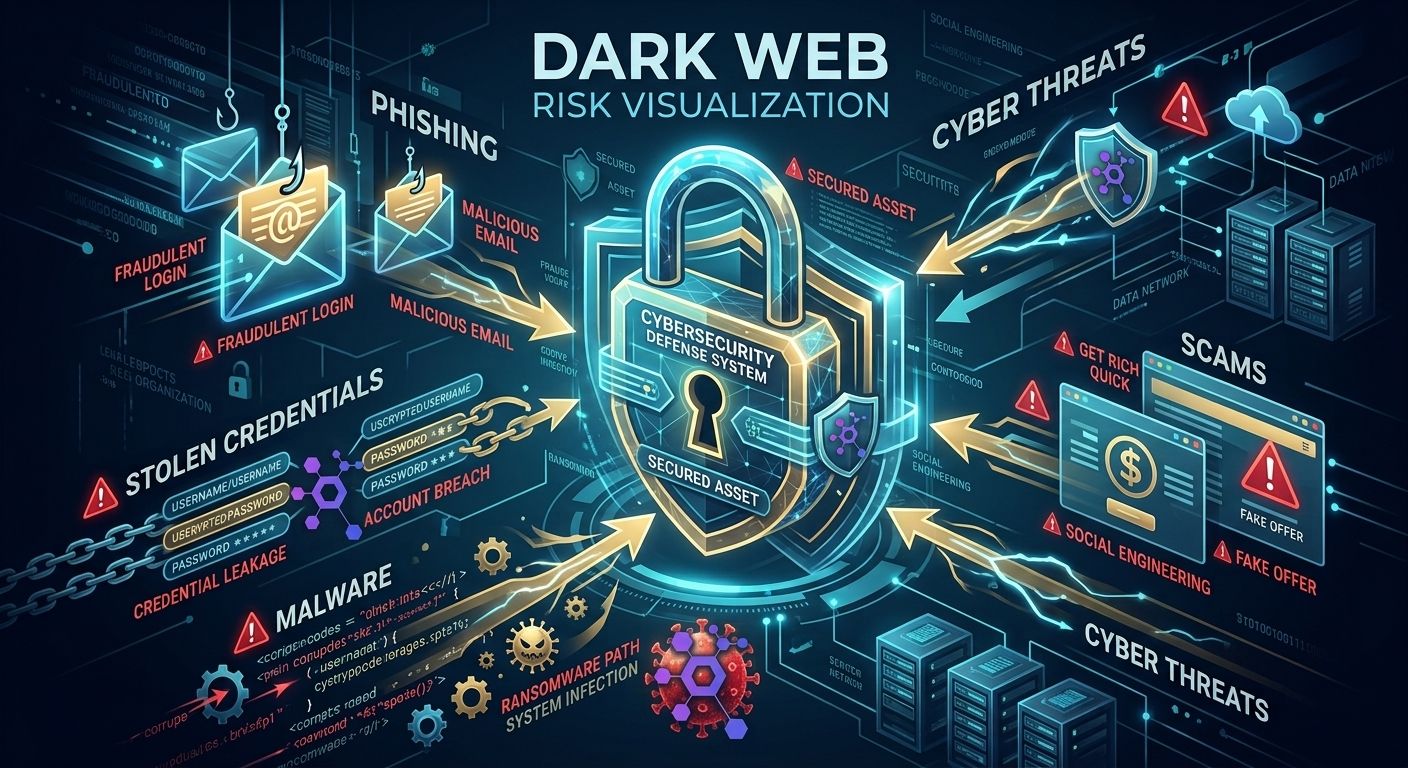
Dark Web Risks You Should Know
Although privacy is one of the main attractions of the dark web, anonymity does not mean complete safety.
Scams and Fraud
Dark-web environments can contain fraudulent websites and deceptive services. Users may encounter fake platforms designed to steal money, credentials or personal information.
Malware
Downloading unknown files or interacting with suspicious websites can expose devices to malware and other security threats.
Stolen Data
Cybercriminals may trade compromised credentials and other stolen information. This is one reason organizations increasingly pay attention to dark web monitoring as part of cybersecurity programs.
Phishing
Phishing attacks can occur anywhere, including privacy-focused networks. A website looking legitimate does not necessarily mean that it is trustworthy.
False Sense of Anonymity
Tor can significantly improve privacy, but users should not assume that it makes them completely invisible. Personal accounts, identifiable information, browser behavior and operational mistakes can still expose information.
Dark Web and Cybersecurity
The dark web has become relevant to modern cybersecurity because information stolen during cyberattacks can eventually appear in hidden online communities or marketplaces.
For businesses, dark web monitoring can help identify potential exposure of corporate credentials, employee accounts or other sensitive information.
Organizations should combine monitoring with strong security practices such as:
Multi-factor authentication
Strong and unique passwords
Password managers
Regular security updates
Employee security awareness
Credential monitoring
Incident response planning
The goal should not simply be to "find the dark web." The more important objective is protecting sensitive information before and after a security incident.
How Can You Stay Safe Online?
You don't need to visit the dark web to improve your online privacy.
Start with basic cybersecurity practices:
Use strong passwords: Never reuse important passwords across multiple accounts.
Enable MFA: Multi-factor authentication can provide an additional layer of account protection.
Keep software updated: Security updates frequently address vulnerabilities that attackers could exploit.
Be careful with links and downloads: Unknown websites and files can contain phishing attempts or malware.
Protect personal information: Avoid unnecessarily sharing sensitive information online.
Use reputable security tools: Antivirus, endpoint protection and secure browsers can reduce common online risks.
The Future of the Dark Web
As concerns about surveillance, privacy and cybercrime continue to grow, privacy-focused technologies are likely to remain an important part of the internet ecosystem.
The future of the dark web will probably involve an ongoing balance between privacy and security. Technologies such as onion services demonstrate that anonymity can have legitimate applications, including protecting journalists, sources and people living under censorship. At the same time, cybersecurity professionals and law-enforcement agencies continue to face challenges associated with criminal activity conducted through anonymous networks.
Understanding the technology rather than simply fearing it is the better approach.
Final Thoughts
The Dark Web is not a separate magical internet. It is a collection of intentionally hidden services that operate through privacy-focused technologies such as Tor.
It can provide valuable privacy and censorship-resistance features, but it can also contain serious cybersecurity risks. Understanding the difference between the Surface Web, Deep Web and Dark Web is the first step toward developing a more accurate view of online privacy.
For everyday users, the most important lesson is simple: online privacy is valuable, but privacy should always be combined with good cybersecurity practices.
FAQ Section
1. What is the Dark Web?
The Dark Web is a part of the internet containing intentionally hidden services that generally require specialized privacy networks such as Tor to access.
2. Is the Dark Web the same as the Deep Web?
No. The Dark Web is a small portion of the Deep Web. The Deep Web also includes ordinary private content such as email accounts, online banking and subscription-based services.
3. Is the Dark Web illegal?
Accessing privacy networks is not automatically illegal. However, activities conducted through them can be illegal depending on local laws.
4. How does Tor work?
Tor routes traffic through multiple relays and uses layered encryption to make direct identification and tracking more difficult.
5. Is the Dark Web safe?
It can contain significant cybersecurity risks, including scams, phishing, malware and stolen information. Privacy technology does not guarantee complete safety.
6. Why do people use the Dark Web?
Legitimate reasons include privacy, censorship resistance, anonymous publishing and protecting sensitive communications.